Author: Thalia Platevoet
Following recent developments in NASA’s Artemis II mission, it’s natural to wonder about the steps for becoming an astronaut. For most, becoming an astronaut was a mere childhood dream that vanished over the years, but for some, it is much more than a childhood dream, but rather a life goal. Whether you are just curious or are genuinely interested in following this career path, this article is for you.
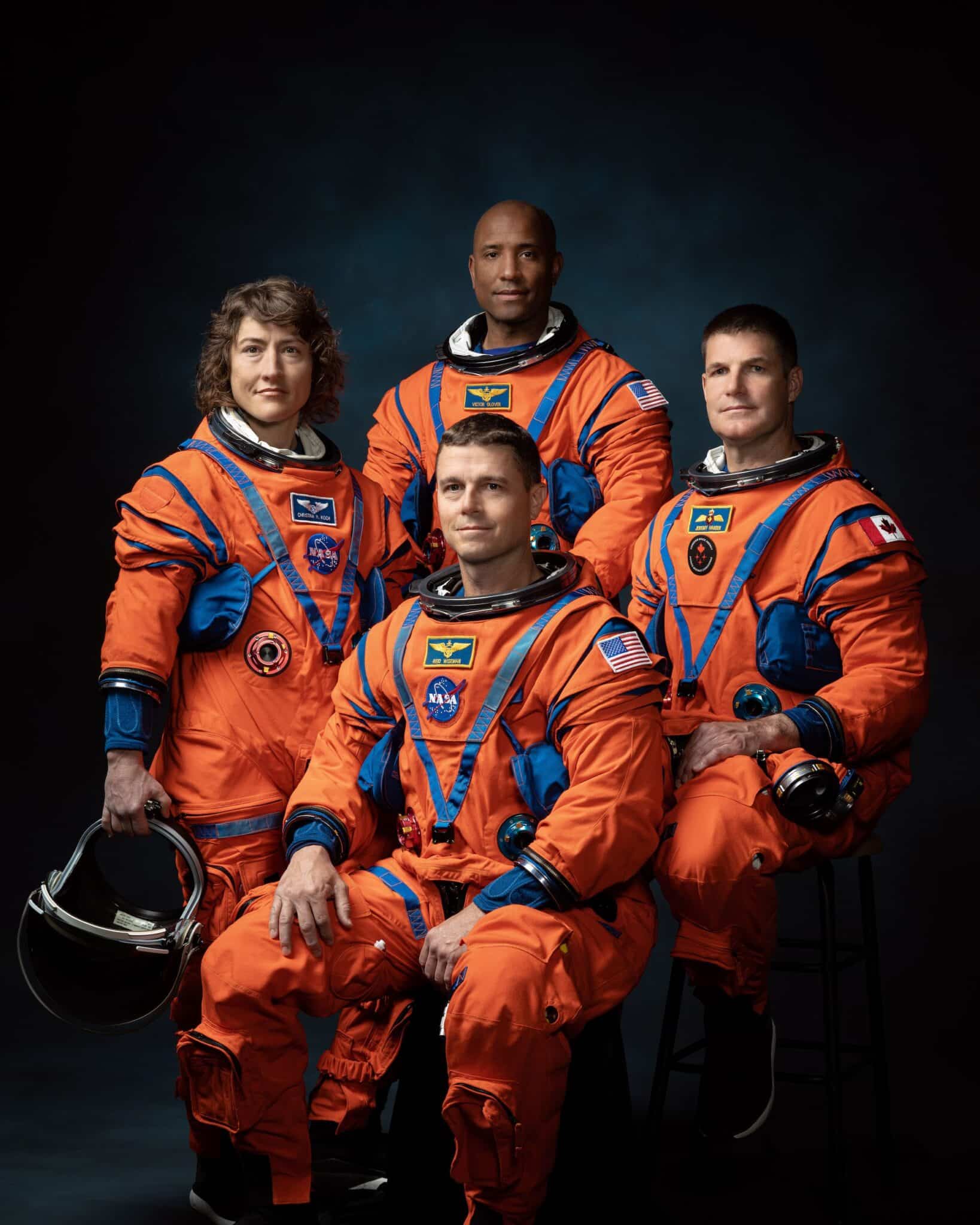
In this article, we will mainly understand how to become a NASA astronaut specifically since itis the most known space administration. First, let’s start by what NASA is. NASA stands for National Aeronautics and Space Administration; it is a United States government agency that is responsible for science and technology related to air and space.In April, NASA sent four astronauts for a lunar flyby; this means that the crew did not land on the Moon but instead flew around it. This mission lasted approximately 10 days, the spacecraft launched on April 1st 2026 and the splashdown happened on April 10th. On board were: Reid Wiseman, the commander, Victor Glover, the pilot, Christina Koch and Jeremy Hansen, who were both mission specialists. The goal was to confirm that the systems are able to support a crew in deep space exploration, essentially serving as a test flight.
So, how do I become an astronaut?
To become a NASA astronaut, the first condition is to be a United States citizen. This condition is compulsory for NASA, but it is possible to participate in a NASA mission without being a NASA astronaut. This is the case of Jeremy Hansen, a Canadian astronaut part of the Canadian Space Agency (CSA), who was a part of the Artemis II NASA mission. If you are not a United States citizen but still want to be an astronaut, do not fret, NASA is not the only path to becoming an astronaut.Later in this article, we will quickly explore other paths. The next step is to have a master’s degree in a STEM field (Science, Technology, Engineering, and Mathematics) from an accredited institution. In order to be accredited, an institution of higher education has to meet certain quality standards. Let’s take Christina Koch as an example: she earned a Master of Science degree in electrical engineering. She studied at North Carolina State University in Raleigh and also abroad at the University of Ghana. She then received an Honorary PhD from North Carolina State University. If you do not or do not plan to study for a master’s degree, there are still other ways to meet this requirement. You may complete a nationally recognised test pilot school program such as the National Test Pilot School (NTPS) based in California. There are other paths related to medicine that you can take to meet this requirement; you may find more information on the official NASA website listed in the references. Following your degree, it is necessary to have obtained a minimum of 3 years of related professional experience after earning the degree stated above. For pilots, it is necessary to complete one thousand hours of Pilot-In-Command (PIC) hours; at least 850 of those hours are required to be done using high-performance jet aircraft. The PIC is the person aboard who is responsible for most of its operation and safety during the flight. If you are a medical doctor, time in residency counts for the required 3 years of related professional experience. Time in residency is the time new doctors spend focused on a medical specialty they hope to practice. Last but not least, the candidate has to successfully pass the NASA long-duration flight astronaut physical. This includes certain requirements such as having a 20/20 vision in each eye, having a minimum height of 1.57 m (62 inches tall) and a maximum of 1.90 m (75 inches tall). Blood pressure must be measured in a sitting position and it must not exceed 140/90. Once all these requirements have been fulfilled, you are qualified to be an astronaut at NASA! But there is one more step, the most important: you must apply. Every now and then, NASA collects applications and picks who will be a future astronaut based on personal interviews, medical screening and many other things. Please note that NASA cannot recruit someone who has medical conditions that could be problematic. But being an astronaut isn’t just about degrees and professional experience, because when you are out in space, it is only you and your crew. If your toilet gets clogged or the electricity goes off, you have to fix it yourself, like a mechanic. Being part of a crew means that it is important to not only be smart but also be fun to be around and be a good teammate.
What about for other agencies?
Since this is an article for a European newspaper, let’s look at how to become an astronaut for the European Space Agency (ESA). ESA doesn’t have specific requirements in bullet points like NASA, but it rather asks for a very wide range of skills, for example : being able to work as a team in confined spaces, passing a swimming test, having a driving license, etc… The ESA is stricter about the physical and medical condition of an applicant rather than their studies. By reading the ESA’s handbook for astronaut applicants that you can find in the references, but one can get a general impression that ESA cares more about a person’s will because knowledge can be gained but passion and motivation is innate.
References:
- https://www.nasa.gov/humans-in-space/astronauts/become-an-astronaut/
- https://www.nasa.gov/mission/artemis-ii/
- https://www.nasa.gov/missions/nasa-answers-your-most-pressing-artemis-ii-questions/
- https://www.ed.gov/laws-and-policy/higher-education-laws-and-policy/college-accreditation#:~:text=Accreditation%20ensures%20that%20institutions%20of,federal%20and%20state%20government%20agencies.
- https://www.nasa.gov/people/christina-koch/
- https://www.asc-csa.gc.ca/eng/astronauts/canadian/active/bio-jeremy-hansen.asp
- https://ntps.edu
- https://www.esa.int/Science_Exploration/Human_and_Robotic_Exploration/Astronauts/How_to_become_an_astronaut
Edited by: Priya Sankara Raman
Cover image: cite-espace