Authors: Luke Ridley, Miina Järviste and Laura Bladosz
Introduction
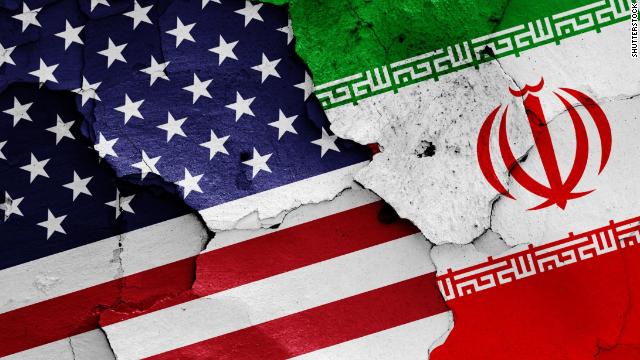
As tensions rise between the United States and Iran, many problems have come with it. Today’s world is shaped around money, business, and markets and conflicts as such can economically reshape the entire world. As the conflict persists, we have seen countries get involved, yet only escalating the situation. In this article, we will present to you the history of the conflict between the two countries, what led to the conflict, the economic impact that has happened to the world, and what is yet to come.
Where did it all begin?
The recent events leave many wondering how things went so far and why. To answer these questions, a deeper look into the history between the two countries is needed.
In 1953, the United States (with British support) orchestrated the coup in Iran that overthrew the prime minister at the time and restored Mohammed Reza Shah Pahlavi to power as a monarch. The goal behind this act was for the U.S. and British oil companies to get an ownership stake in Iran’s oil production through the Shah. Any involvement in this act was denied by the Central Intelligence Agency (CIA) of the U.S. government until it finally admitted its involvement in 2013. [1]
After the Shah’s return to power, he and the U.S. kept tight relations providing Iran with nuclear technology and education. Also in 1972, Richard Nixon, the U.S. president at that time, visited the Shah in Iran, where they appeared in public waving together. [1]
However, the monarch was unpopular in Iran due to his authoritarian rule, inequality, and repression of the country, which ultimately led to the Iranian revolution in 1979. The revolution was led from Paris by Ruhollah Khomeini and resulted in the Shah being exiled, together with Khomeini’s rise to power in Iran and the start of an Islamic Republic under religious leadership. This cut Iran’s connections with the U.S. as the new leader did not identify with the country and was against the Western world. [1]
The relationship between the two countries was damaged even more when the U.S. offered the exiled Shah medical treatment in the country, irritating some Iranians, who then took 52 Americans hostage from the U.S. embassy in Iran. The capture of 52 of the hostages lasted for 444 days, and during this time, Americans became more hostile toward Iran. [1]
In 1983, 241 American marines and sailors lost their lives in a bombing at the Beirut barracks orchestrated by the Islamic Jihad Organisation, which was believed to be linked to Iranian-backed groups. Following this attack, the U.S. labelled Iran a “state sponsor of terrorism”.[1]
The next event that brought tensions between the United States and Iran was the U.S. shut down an Iranian passenger jet flying over the Strait of Hormuz at the end of the Iran-Iraq war. According to the U.S., it was an accident, and they mistook it for a military jet. However, to Iranians, this indicated the U.S. joining forces with Iraq. Indirectly, the U.S did aid Iraq in the war, but it never joined forces in an attack. [1]
In 1989, after the Iran-Iraq war, Ali Khamenei became Iran’s supreme leader after gaining popularity during the war. [1]
During the 1990s, the U.S. attempted to control Iran through economic sanctions. These included blocking U.S. companies from investing in Iranian oil-related companies, banning the sale of advanced technology to the country and limiting the import of many Iranian goods. Ultimately, these measures had little impact on Iran and its growth, as it was able to manage with the trade with other countries. [1]
However, during the administrations of Bill Clinton and George W. Bush, the two countries managed to work together to let Afghan refugees return home following the U.S. invasion of Afghanistan. This momentary thaw in the U.S.-Iran relations soon ended when President Bush called Iran an “axis of evil”, together with North Korea and Iraq. In 2013, the newly elected Barack Obama tried to make a nuclear deal with Iran, which ended up in the Joint Comprehensive Plan of Action (JCPOA). This agreement included the U.S., Iran, China, France, the U.K., Germany, Russia, and the European Union. The U.S. eased some economic sanctions on Iran, and in exchange, Iran agreed to reduce its nuclear activities, limit uranium enrichment for at least 15 years and to be subject to international monitoring. President Donald Trump removed the U.S. from this agreement in 2018. [1]
Tensions further escalated when Donald Trump ordered a drone strike on the Baghdad airport to assassinate Qassem Soleimani, a powerful Iranian general in charge of Iran’s foreign military operations. The act was considered by the previous presidents, but they saw it as an unnecessary initiation of war. However, according to Trump, no broader war was sought. [1]
The U.S. presidency was held next by Joe Biden, who attempted to restore the JCPOA agreement to prevent Iran from obtaining nuclear weapons. However, he also spoke up about the women’s rights situation in Iran, saying that he stands by the country’s citizens. [1]
In recent years, U.S. policy toward Iran has continued to fluctuate with changes in administration.
The tensions between the United States and Iran have developed over decades of political conflict, shifting alliances, and disagreements over nuclear policy, Iranian oil, and governance. The relationship has repeatedly changed direction depending on U.S. administrations.[1]
Current situation
On the 28th of February 2026, US and Israel struck Iran. The conflict between the United States and Iran in 2026 quickly escalated into open military action. The United States, together with its allies, carried out airstrikes on important targets in Iran, mainly military bases and strategic locations. In response, Iran launched missiles and used drones to attack U.S. bases and other key sites in the region. As a result, the conflict spread beyond just these two countries and affected a larger part of the Middle East. [2, 3]
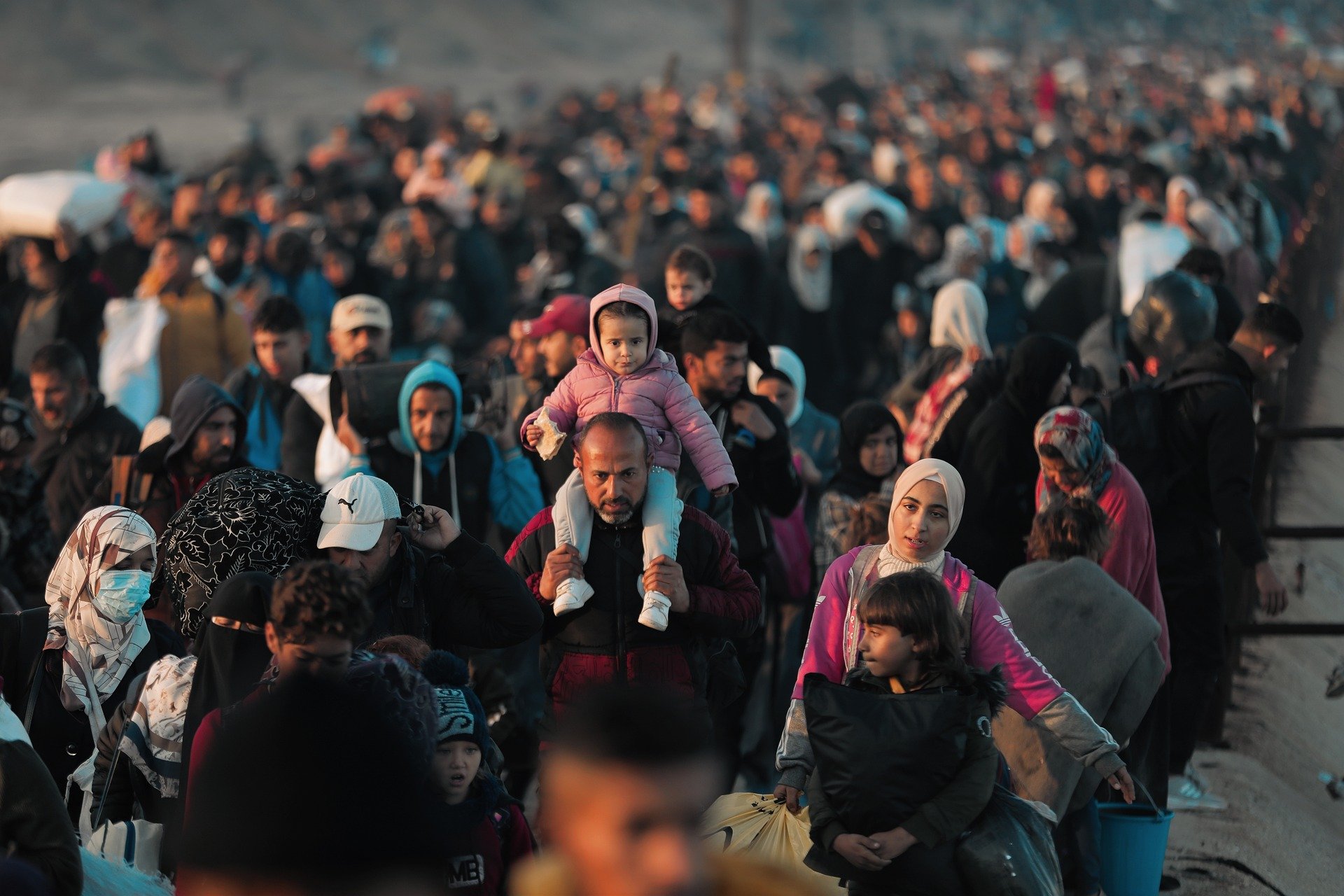
This conflict also had a strong impact on the global economy. Oil prices increased significantly, which led to higher fuel prices and affected everyday goods. Important trade routes were disrupted, making transportation and international trade more difficult. In addition, the conflict had serious consequences for civilians, as many people were injured or forced to leave their homes.[2, 3]
Other countries and international organisations reacted quickly by calling for peace and trying to reduce tensions. Some of them attempted to mediate and find a diplomatic solution to prevent the situation from getting worse. [2, 3]
During the ongoing conflict, Revolutionary Guards Navy Commander Alireza Tangsiri and Iranian Supreme Leader Ayatollah Ali Khamenei have been killed. The latter has now been replaced by his son, Mojtaba Khamenei.[5] According to data confirmed by the Human Rights Activists News Agency (HRANA), there have been approximately 1,574 civilian and 1,211 military, 707 unclassified fatalities, as of 30th of March 2026, at 18:00 ET. The casualties continue to increase and every day the HRANA comes up with new updates to the numbers.[6]
Following talks with the foreign ministers of Pakistan, Egypt, Saudi Arabia and Turkey, the US had made a peace proposal to Iran. However, the Iranian Foreign Minister found it too “unrealistic”, the spokesperson said that they are focusing all their efforts to defend their country. This was followed by Trump issuing a new threat to blow up Iran if they do not free the Hormuz Strait, an important oil transport route. [5]
Analysts say that the US made multiple miscalculations before the war and should have better mapped out the plan, as currently, they are not in control of the situation.[4]
Effects on the global economy
The most immediate and visible impact of the conflict has been on energy. Iran has used missiles and drones to effectively blockade the Strait of Hormuz, the vital chokepoint through which 20% of the world’s oil passed daily before the war [7], while also attacking Gulf oil and gas facilities. The result has been a big spike in oil prices, with some analysts warning of $150 a barrel if the blockade holds [8][9]. Around 2,000 vessels and 20,000 seafarers are currently stranded in the strait, unable to move, leaving massive amounts of cargo the world needs sitting there completely stuck [10].
What makes this particularly worrying is that the damage is already locked in. Even if the conflict ended tomorrow, the world is now facing price increases and potential shortages for energy and food that are already baked into the system. One Oxford professor described the situation as an epoch-defining event, comparable in scale to the fall of the Berlin Wall or 9/11, warning that the economic knock-on effects ahead are “epic in scale.” That’s a sobering thing to hear about something that is still actively unfolding.
Iran has also made a bold economic power play, essentially setting up a toll booth on 20% of the world’s oil supply by charging ships for safe passage through the strait [11]. At least two vessels have already paid large sums to cross. This gives Iran enormous leverage, and it shows just how much control the conflict has handed one country over global energy flows.
The ripple effect is spreading far beyond the Middle East. In the United States, the uncertainty combined with a weakening job market is pushing mortgage rates higher, making home ownership even harder for ordinary buyers. Stock markets have been rattled, with major indexes seeing sharp losses and volatility refusing to settle [12]. In Europe, the ECB has warned that a prolonged conflict could tip energy-dependent economies like Germany and Italy into recession by the end of 2026 [13].
There are faint diplomatic signals today. Pakistan has brokered a limited deal allowing some ships to pass through under its flag, and foreign ministers from Pakistan, Turkey, Egypt and Saudi Arabia are meeting in Islamabad to try to find an off-ramp. Trump has paused threatened strikes on Iranian energy infrastructure until April 6, partly due to growing domestic pressure as American voters feel the pinch of rising prices [14]. But with one month of war already behind us, the economic pain is very real, and every day this continues just makes the eventual recovery longer and harder. The recent development has made Trump reconsider the war. This resulted in a ceasefire for peace talks, however Iran has not opened up about the results of the peace talks. With a three week extension, we can hope for a peaceful resolution, despite the difficult spot the U.S. finds itself in.
Conclusion
The conflict between the United States and Iran is the result of decades of tension, mistrust, and competing interests that have repeatedly escalated rather than been fully resolved. What started as political interference and ideological differences has now grown into a conflict with serious global consequences. The current situation shows how quickly regional disputes can impact the entire world, especially through energy markets and international trade. While there are still efforts to reduce tensions, the future remains uncertain. If the conflict continues, its economic and humanitarian effects are likely to deepen, making it even more important for diplomatic solutions to be found.
Sources:
Grant, T. (2026, March 5). U.S.-Iran Relations: A Timeline | 1953 Coup, Hostage Crisis, Iran-Contra Affair, JCPOA, & 2025 and 2026 attacks. Encyclopedia Britannica. https://www.britannica.com/topic/US-Iran-Relations-A-Timeline#ref473433
A History of US-Iranian Relations. (2024). Osu.edu. https://mesc.osu.edu/news/history-us-iranian-relations
The Week Staff. (2020, January 19). Four decades of conflict with Iran, explained. The Week. https://theweek.com/articles/889872/four-decades-conflict-iran-explained
Spetalnick, M., & Bose, N. (2026, March 21). Three weeks in, Iran war escalates beyond Trump’s control. Reuters. https://www.reuters.com/world/middle-east/three-weeks-iran-war-escalates-beyond-trumps-control-2026-03-21/
Cornwell, A., & Hunnicutt, T. (2026, March 30). Iran defiant as Israel strikes Tehran and drones fired at Israel from Yemen. Reuters. https://www.reuters.com/world/asia-pacific/trump-calls-irans-current-leaders-very-reasonable-pakistan-prepares-host-talks-2026-03-30/
Day 31 of U.S. and Israeli Attacks on Iran: Humanitarian Concerns Amid Hundreds of Strikes. (2026, March 30). HRANA. https://www.en-hrana.org/day-31-of-u-s-and-israeli-attacks-on-iran-humanitarian-concerns-amid-hundreds-of-strikes/
U.S. Energy Information Administration — Strait of Hormuz remains critical oil chokepoint – https://www.eia.gov/todayinenergy/detail.php?id=65504
Bloomberg — Iran War: How High Could Oil Prices Get with Strait of Hormuz Closure? – https://www.bloomberg.com/graphics/2026-iran-war-hormuz-closure-oil-shock/
CNBC — The Strait of Hormuz is facing a blockade. These countries will be most impacted – https://www.cnbc.com/2026/03/03/strait-of-hormuz-closure-which-countries-will-be-hit-the-most.html
Wikipedia — 2026 Strait of Hormuz Crisis – https://en.wikipedia.org/wiki/2026_Strait_of_Hormuz_crisis
Al Jazeera — Iran’s IRGC says not one litre of oil will get through Strait of Hormuz – https://www.aljazeera.com/news/2026/3/11/irans-irgc-says-not-one-litre-of-oil-will-get-through-strait-of-hormuz
FactCheck.org — How Iran Blocking the Strait of Hormuz Affects the U.S. – https://www.factcheck.org/2026/03/how-iran-blocking-the-strait-of-hormuz-affects-the-u-s/
NBC News — Iran’s new supreme leader vows to keep blocking Strait of Hormuz – https://www.nbcnews.com/world/iran/live-blog/live-updates-iran-war-oil-ship-attacks-hormuz-trump-israel-lebanon-rcna263101
Congress.gov / CRS — Iran Conflict and the Strait of Hormuz: Impacts on Oil, Gas, and Other Commodities – https://www.congress.gov/crs-product/R45281
Cover image: Shutterstock
Edited by: Amir Mussagalee