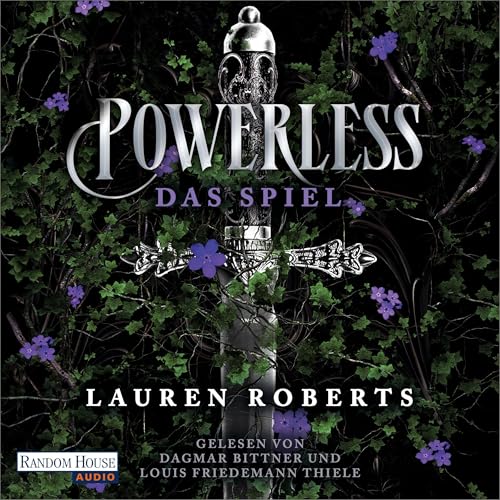
Analysis of Powerless by Lauren Roberts, in the Social injustice aspect, written by Priya Sankara Raman
Is power always the key to respect? Are the possessors of this ‘power’ filled with arrogance? Well, according to the trilogy’s first book, Powerless by Lauren Roberts, the answer to both is yes.
The novel takes place in a kingdom divided into two: the Elite-born and the Ordinary-born. Elites are born with supernatural powers; the strongest live in sophisticated areas or work directly for the King, while weaker Elites are forced to live in the “slums,” a decaying city close to the palace. Power is everything in this world.The Ordinaries, on the other hand, are outcasts, hunted down and killed by the Elite King. They are disregarded by society and struggle to survive; their attempts to blend in are never going unnoticed.
Although the novel is a romance, the aspect of social injustice is often overlooked. The protagonists are Paedyn Gray and Kai Azer.
Let’s look into Paedyn’s life first. Paedyn Gray is a girl born without any power, yet she manages to blend in with the Elites. She lives in the slums alongside her best friend and sister-like figure, Adena, both of whom have lost their parents. As they are very poor, they make a living out of thievery: Paedyn steals daily by blending in with the Elites in the slums, while Adena makes clothes from stolen fabric and sells them.
How does Paedyn blend in? Before her father’s death, he trained her in two things: faking a “weak” (non-existent) Elite power, pretending to be a Psychic, and in combat. So, she may be powerless, but she manages to survive by completely fooling the powerful-born. She predicts small things about people’s lives by reading and analyzing them. It’s all a mind game, really, but no one tends to notice.
Kai Azer, in contrast, is one of the most powerful Elites in the kingdom, the King’s second son. Trained to become the future Enforcer, his role is to hunt down and kill Ordinaries. Feared and respected, Kai follows his father’s orders publicly, but secretly spares lives by sending outcasts into exile. Despite his remorse, he is forced to compete in the Purging Trials, a set of brutal challenges attended by the strongest Elites, to prove his strength to the kingdom.
The story shifts when Paedyn saves Kai’s life during one of his hunts. This act earns her praise and changes her life entirely. In a society where power means worth, her bravery gives her the right to exist.
Let’s pause here. Shouldn’t the powerless be treated as equals, too? Just because they don’t possess ‘abilities’, should their lives constantly revolve around survival, running, and hiding? All because of a corrupt King and a corrupt society?
It’s important to mention that the powerful are egocentric and view themselves as superior. When Paedyn pretends to be one of them, they never question or even notice the lie. They believe that no mere Ordinary would ever cross them, let alone pretend to be like them, because in their eyes, it’s impossible. If you don’t possess these powers, you are nothing in this twisted society.
After saving Kai, Paedyn is forced to participate in the Purging Trials. Refusing would raise suspicions, so she begrudgingly agrees. Brought into the palace, she meets the other competitors and trains alongside Kai, and they become close. During this time, the King grows suspicious of her psychic ability, yet quickly dismisses his doubts. Convinced of his own superiority, he believes he would have sensed her powerlessness if it were real. Because nothing gets past him, right?
Plot reveal ahead: This arrogance leads him to his death, towards the end of the book. Paedyn kills the King after the trials, ending his reign. Sure, he’s the villain and everything, but if he’d set aside his arrogance and checked his suspicions, he might have survived. The real question is, though, if he had not been consumed by power and cruelty, countless lives—including his own—might have been spared, right?
So, way before the Trials conclude, and before the King dies, Paedyn discovers a Resistance working to overthrow the King. Made up mostly of powerless-born and weak Elites, they want to end his reign and reclaim freedom. Paedyn joins them, torn between loyalty to her people and her denied feelings for Kai.
Yet the novel raises an important question: even if the Resistance succeeded, would the Powerless truly gain respect? Overthrowing a ruler can’t erase generations of hatred. Change takes time and general acceptance, and many wouldn’t live long enough to see real equality, will they?
The Resistance’s attack fails, and tragedy strikes during the final Trial. To win, a competitor must kill Adena. Yes, Paedyn’s best friend. Paedyn refuses, only to watch another competitor murder her best friend. Adena’s death exposes the King’s true weakness. He sacrifices her not out of necessity, but to ensure Kai’s victory and maintain his image of power. Paedyn is nothing but a threat to him, an obstacle. The King’s actions are not strategic—they are cowardly. To ensure Paedyn’s failure, he destroys what she loves most. All this for a victory she did not desire, to ensure his son, his Enforcer, would win, which, unfortunately for the King, doesn’t happen either because he refused to kill someone so important to the girl he deeply cared about.
Power corrupts people, doesn’t it? The King’s need for power drives him to take extreme and ruthless measures. He took so much away from so many innocent people, and what he has done would leave a scar deep enough to exist for a long time.
His lack of remorse and twisted self-esteem is due to this incessant craze for this word that holds so much power within itself: Power.