Author: Iskra Zarić
A few days ago, I read on a news site : “Women in Afghanistan have officially lost all their rights”. I was appalled and utterly shocked.
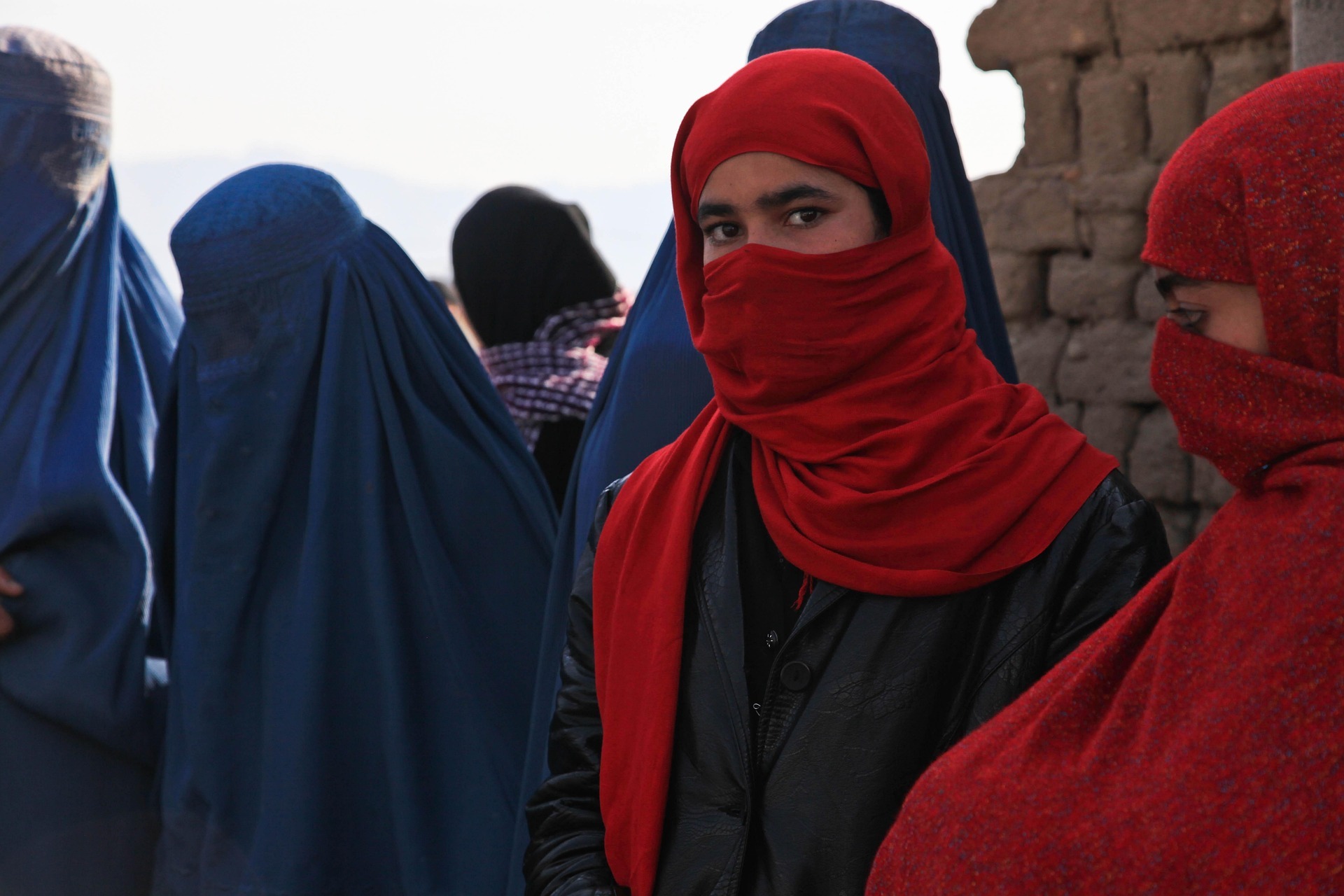
That actually isn’t completely true. They haven’t lost all conceivable rights, like the right to exist, but they have truly lost almost all fundamental human rights, meaning they cannot be educated, employed, move freely or show any inch of their skin. They are practically not allowed to exist or live their life. They have to be invisible and feel invisible, simply because they are women in a society that does not accept them.
You might ask yourself: where does this all begin? What led to such dreadful circumstances? In the early 1900s, most women in Afghanistan had very few rights. They didn’t have the right to education, but were forced into child marriages, obliged to stay at home and care for children. Not the ideal life, right?
That all changed during the rule of King Amanullah Khan, who reigned from 1919 to 1929. He wanted Afghanistan to become more modern, to improve it’s economic and social standing. But the key to this sudden change was his wife, Queen Soraya Tarzi, who strongly supported women’s education and freedom. During her reign girl’s schools were opened, women were allowed to stop wearing the veil and they were encouraged to study and work.
Not everyone was happy with those changes. Between the 1930s and the 1950s, many conservative groups, such as religious and tribal leaders, opposed to these adjustments, and after Amanullah lost power, many reforms were reversed. People thought his reforms happened too quickly, especially the changes involving women’s clothing, education and public life, leading to many girl’s schools closing, and women once again being encouraged to wear veils and stay at home.
In the period between the 1950s and the 1970s, women gained more freedom again, especially in cities like Kabul. They could go to university, become doctors, teachers and lawyers, wear modern clothes and most importantly, they were provided with the right to vote in 1964, showing that Afghanistan was evolving into a modern country.
Of course, this freedom only applied for women in cities, who were educated and had wealthy families. In rural areas, many women still lived under strict traditions because they weren’t educated, and they married young, so they depended on men economically. Secondly, even with more rights, many women still relied on their fathers or husbands for permission to study, work, travel or marry. This shows us society remained strongly patriarchal. Lastly, child marriage, forced marriage and the pressure to follow traditional gender roles were still excessively common in rural and tribal areas, especially in southern and eastern Pashtun tribal belts. Most women were still expected to marry young and live a house life, even during the “golden age” for women there.
Between 1979 to 1989, during the Soviet war, the Soviet Union invaded Afghanistan. This war caused immense suffering for everyone, including women. Some communist leaders tried to increase women’s education and equality, but the war created instability and violence between everyone. Millions of Afghans became refugees.
In the 1990s, right after the Soviet Union left, Afghanistan entered a civil war. The Taliban, taking advantage of the situation, began ruling in the year 1996, taking control of most of the country. Under their rule, women and girls suffered anew. Their rights got taken back, they were banned from going to school, they couldn’t work, they had to always wear the burqua in public, and they could not travel without a male relative. On top of that, strict punishments were enforced on any women breaking these rules. Punishments included public beating and whipping if any inch of their skin was visible, executions in public places and amputations.
Between 2001and 2021 women’s rights finally expanded again, after 11 attacks by the United States and allies removed the Taliban from power in September 2001. Over the next 20 years, women once again regained some of their rights. There were even laws introduced to protect them. Many Afghan women became a symbol of progress and hope.
Lastly, let’s talk about the Taliban return. In August of 2021, the Taliban came back to power after foreign troops left Afghanistan. They once again started terrorizing and restricting the women there. Every single day, women lose more and more rights and more and more freedom. They lose themselves. Like I said at the beginning, they have almost lost everything. Everything but hope. They continue to fight, to protest and to speak up, despite the endless risks. Even though the history of women in Afghanistan has been marked by many ups and downs, there is always a possibility that their future will one day be brighter and freer.
Cover image by: Amber Clay from Pixabay
Edited by: Nora Kessler