Over the course of time, movies and music have educated us, helped us communicate ideas, share emotions and art, and given us means to evade our complicated world. But what about the people behind the screen? They’re often portrayed as living their glamorous lives and making an impact on the world. But is that really the case?
Many of their supporters have noted recurring patterns affecting young female singers and actresses. Most of these women started their careers hoping to make a living out of their passion. In several documented cases which have been released to the public, the entertainment industry has been accused of exploiting young performers.
We will evaluate the plausibility of this assumption by looking at the history of six prominent female entertainers.
Author: Laura Brebenel
What stories do these six women tell?
Firstly, Judy Garland, the oldest of these high-profile cases. Most people know Judy for her starring role as Dorothy in ¨The Wizard of Oz¨ back in 19391. After the film’s anticipated release, it became one of the most successful adaptations of the novel. However, the truth about the making of the movie was revealed only about eighty-one years later, shaking the industry to the core. Later testimonies suggest that film sets could sometimes expose young actors to unsafe environments. Some later reports suggest that young Judy had been potentially sexually harassed multiple times by ¨munchkins¨. But Judy´s tragic life goes far beyond ¨The Wizard of Oz¨. It started at the age of two when she first entered the business23 to finish at 47 on her bathroom floor when she died due to a drug overdose4.
Next, we have famous movie star, Marilyn Monroe. She was considered as one of the most influential women of her time due to her captivating screen presence5. However, she desperately wanted to break free from the ¨dumb sexy blonde¨ label her producers had forced her into forever playing6. Sadly, she never got that opportunity since her time was cut short at only 36 years due to an overdose7.
Brooke Shields, yet another talented actress, was exploited and sexualized as a child in several different movies8 and had her first Playboy photographs released at the age of ten9.
Britney Spears, a woman who used dancing and singing to escape her chaotic life, ended up trapped and controlled10 in the very thing she used to love.
Emma Watson, famously known as Hermione Granger, often underestimated and compared to her male co-stars11.
And finally, Ariana Grande, a former child actress, reportedly subjected to verbal abuse under Dan Schneider.1213 Today, she is often criticized online for her physical appearance and weight14.

All these women rose to fame young, were commodified by powerful adults, and had their bodies, voices or autonomy taken over by industries that prioritized profit over well-being. In many cases, these issues remained underreported for years because of the power structure within the entertainment industry. It is important to raise awareness over the latter’s sources of suffering and exploitation since it all usually starts at a young age. Children and teenagers are often more vulnerable to manipulation. The damage adults can bring to a child in their upbringing by placing their hopes and full trust in them is very important. Thus, their voices need to be heard over and over again so that the same mistakes stop repeating time and time again.
Fame under supervision
Another recurring issue is that most of these girls were pushed to perform, and highly controlled at that by a parental figure working together with the studio employing them.
Judy Garland’s career was controlled from her childhood, primarily by her mother, Ethel Gumm15. Ethel pushed Judy into performing at an extremely young age and reinforced the idea that her value resided only in entertaining others. When Judy entered Hollywood, that control shifted seamlessly into the studio’s area of influence. Her mother continued to remain complicit in overseeing diets, schedules, and expectations that prioritized fame over Judy’s physical and emotional well-being. Garland grew up with little autonomy, internalizing the pressure to perform at any cost.
Marilyn Monroe lacked a traditional parent altogether, the absence of a stable caregiver leaving her vulnerable to authority figures available to fill that role. Raised in foster homes and under guardianship, mistreated and neglected, Marilyn learned early that survival depended on compliance. Studio executives and managers later assumed controlling, quasi-parental roles, dictating her image, behavior, and career choices. Without a protective parent advocating for her autonomy, Monroe was repeatedly managed and molded by others who held power over her livelihood.
Brooke Shields’s mother was an alcoholic who reportedly emotionally abused Brooke and frequently body-shamed her16. Teri Shields made her daughter start working at 11 months old17. At 12, Brooke got hired to play ¨Pretty Baby¨ a movie. This was not only a controversial movie, but it had been R-rated due to depicting scenes with gore, drugs, violence and nudity18. Brooke Shields, being only a child, appeared to be sexualized; she even played a scene partially nude. The media would later call this child pornography and would accuse Teri Shields of being a bad mother for even permitting her daughter to play this role. At the time, Teri Shields appeared largely unconcerned by the backlash and continued managing her daughter’s career. As Brooke was only ten, her mother consented to Brooke posing for a series of nude photographs for Playboy that would later be published in their magazine Sugar ‘n’ Spice19.
Finally, one of the most widely discussed cases of industry and family control is Britney Spears. Now, Britney’s childhood didn’t exactly start well, since both her parents had experienced their own share of trauma, especially her father. Very early in her life, Britney found and used singing and dancing as coping mechanisms for her chaotic home life. She would later move to New York with her mother to attend a professional performing arts program. This immersed young Britney in an adult competitive environment. She would later play in one of the Mickey Mouse Clubhouse episodes under the company MMC at the age of 11. This moment was marked as her first long-term exposure to being a commercial asset. It also normalized the idea of adults controlling her schedule, image, and future. Because children typically rely on parental authority, however, in Britney’s case this parental authority would go long past her childhood years. For many years, her independence regarding career and financial decisions was legally restricted.
The conservatorship was primarily controlled by her father, Jamie Spears. In 2008 she would be placed under conservatorship with her father, this meant that he took care of her finances, career decisions and personal life for the next 13 years20.
The weight of public scrutiny
Another common issue in this industry is the weight of public judgment. Most of the star artists weren’t even allowed to have a private life. For example, the main reason why Marilyn Monroe had to be depicted as a dumb blonde was because it was believed that she would lose popularity if she was seen instead as a strong independent woman with a larger range of emotions both on and off screen.
Brooke Shields not only had the weight of her mother and her agency constantly pushing her to present a sexual image, but also the public’s. Even today, people talk about how she was an attractive and provocative figure at only 1321.
When Britney Spears was dealing with an incredibly difficult phase of her life, paparazzi would constantly observe and follow her. In 2007, when she had just shaved her head to feel some kind of control over her body, paparazzi still managed to swarm her to capture this ¨iconic¨ ¨shocking¨ moment.
Emma Watson experienced a lot of sexism on the internet by constantly being compared to her male co-stars Daniel Radcliffe and Rupert Grint when the Harry Potter movies were released. She experienced similar issues to Britney’s with the paparazzi. On her 18th birthday, when she was leaving the restaurant, paparazzi lay on the floor to try and take photos up her skirt22. Watson would later state that this incident reflected how her transition into adulthood was treated very differently by the press, compared to her male co-stars.
How were they able to stay productive over such long periods of time?
Many of these women such as Judy Garland and Marilyn Monroe had to work extremely long hours with very complex schedules. Judy Garland worked around 18 hours per day, six days a week23, and Marilyn worked about twelve hours per day. In time, many started wondering how they were able to work such long hours with no breaks, especially Judy, since she had been working these long hours ever since she was a teenager.
As much as Hollywood has tried to hide it over the years, the truth is Judy had been given stimulants to stay awake and sedatives to fall asleep24, even as a minor. Even most adults can’t sustain an 18-hour 25workday for so long. Her employers in show business had to resort to keeping a child awake with drugs.
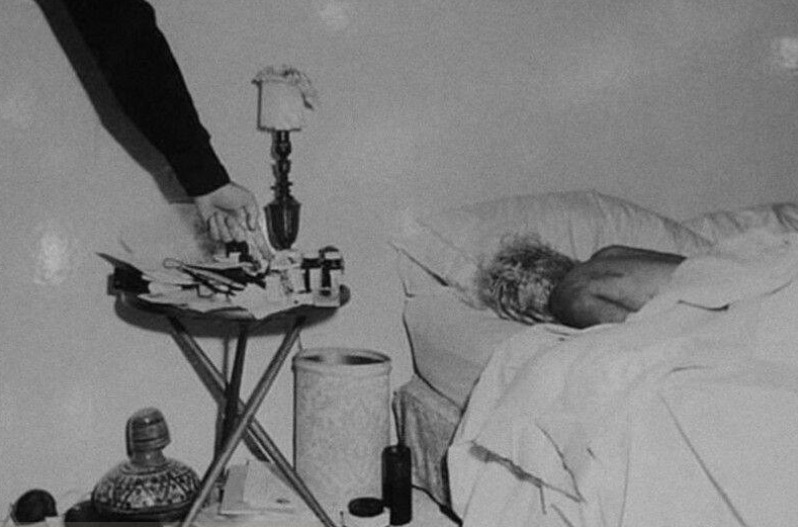
Marilyn Monroe too was prescribed barbiturates and sedatives to cope with the stressful life of a successful star. She was prescribed stimulants during the day and downers at night. The combination of sedatives, stimulants, and alcohol put her at high risk of overdose. Eventually, Marilyn would also be prescribed barbiturates to treat her insomnia and anxiety. Her dependence on these drugs would ultimately lead to her death on August 5, 1962, which would be widely considered a probable suicide.
More recently, people have started fixating on every aspect of Ariana Grande’s relationships, especially with Cynthia Erivo. What initially seemed like a sweet close relationship has been turned into a joke online. People have also started commenting on her weight and her appearance, saying she should go back to the way she looked in 2018.

Why is this still happening today?
These issues have been spoken about before, even by the actresses themselves, so why do these repetitive patterns keep occurring today? A major reason lies in the lack of child labor protection laws in the entertainment business. The fact that many of them typically start at a young age also subjects them to a significant power imbalance when faced with their employers. Of course, during the 1960s, the issue was far worse. However, today, there are still many young girls subjected to cases of abuse by a parental figure or by their company for the sake of staying profitable.
The other issue is the cultural misogyny that women have experienced since the very start of filmmaking until today.
And finally, we have the audience rewarding invasive media with attention. Fans are often easily entertained by celebrity controversies. Anonymity makes it easier to judge and comment on celebrities. This dynamic can make many forget the fact that celebrities are also individuals with private lives. Comments that are often considered insignificant may cause considerable damage. Our constant interest in celebrities’ private lives encourages the invasive paparazzi to go on harassing them and the press to pay well for any material about them. Some fans can become heavily involved in celebrities’ private lives which can, in some cases, create an unhealthy cycle and the vicious circle continues.
The mistreatment these performers have experienced can show how fame, especially at a young age, can expose many artists to pressure and control. However, it is important to note that not all celebrities have had their dreams crushed by this industry. Meaning that exploitation is not always an inevitable aspect of celebrities’ lives. Though greater protection for young performers and increased accountability from both the industry and the media could help prevent similar situations in the future. The question remains whether audiences and companies are willing to rethink the systems that shape the lives of those who entertain us.
Cover image: Police investigation of Marylin Monroe’s Death
Edited by: Kajetan Jankowski; Jeanne Gaudin.