The universe is far more complicated than we think, but perhaps we have overlooked certain things that may lead us to another groundbreaking discovery? If Pluto lost its place as the ninth planet, is there another planet concealed in its shadow? If so, how does it work, and how come we haven’t had any data on it yet? I hope these questions will be at least partially answered throughout the article. Maybe even you can help?
Author: Ewa Fijałkowska
To fully understand this topic, one must go back to 1781. William Herscheli, after a sunny day, looked through a telescope and found a mass floating in space. At first, he considered it to be a comet, but it lacked a tail, which would mean it was a planet, now it is known as Uranus. Turns out, it has already been observed as far as 128 BC on cosmology maps, but being mistaken for a star.
In the 19th century Alexis Bouvard, using Newtonian Physics, found out the unusual movement of Uranus, proposing a theory, in which another mass pulled Uranus causing its anomaly in the orbit. This theory was followed by Urbain Le Verrier in 1845ii, who decided to use something no one else ever used to determine a planet’s existence – math. He calculated where the planet must be, including its mass and size. This search was followed by Johann Gottfried Galle, who found the place which Le Verrier previously calculated. Turns out, he was only off by 1 degree. It’s now referred to as Neptune. We have to underline that as well as Uranus, it already appeared on past maps, even found on the 1612 map of Galileoiii!
But what does it have to do with today’s cosmology? And why even bring up these ancient planets?
Well, because of the previous theory, in 1915, Percival Lowelliv refused to accept the fact that it’s the only case of such phenomenon. He started his research, even funding it with 1 million dollars. The planet he was supposed to find would be named “Planet X”, and it would be located further than Neptune. Unfortunately, the only thing they found was Pluto in 1930, which after 2006 wasn’t even referred to as a planet. But it wasn’t as large as Lowell speculated it would be, proving it was not what he had in mind and the search stopped.
Only in 2016, two astronomers from Caltech Universityv, Konstantin Batygin and Mike Brown reissued the theory. Resulting in a calculation stating that “Planet X” must be 2-4 Earth’s radii, and 5 to 10 times heavier, with an orbit speculated to be “about 20 to 30 times farther from the Sun on average than Neptune.”, as the NASA “Is Planet X Real?” article states.
But what is it based on? Something so big, that even NASA has recognized?
They weren’t the first ones to notice the possibility of a ninth Planet. In 2014 Astronomersvi Chad Trujillo and Scott S. Sheppard have noticed that “Sedna”, a dwarf planet orbiting further than Neptune, followed many similar patterns for orbiting such as 2012 VP113 among other ETNOs. But what even is ETNO? It’s an extreme trans-Neptunian object, which is a hard word describing any Trans-Neptunian objectvii, characterized by very large semi-axes, very distant perihelia and indifference to the gravitational force of Neptune. Large semi-major axes is a term used to describe half of the longest diameter of an orbit, which just means the average distance of the object from the Sun. There are certain types of ETNOs, like Sednoids. “Sedna” is one of them, characterized by high perihelion, measured by calculating the nearest point of its orbit to the Sun. Their Orbital clustering could be just a randomness, but is it really?

Because of these patterns, in March 2016 Brown, who already studied many TNO’s (trans-Neptunian objects), had described these similarities with Batygin in the University of Caltech, and started this project again; The theory of Planet 9 (X).
Are Planet 9 and Planet X the same?
Although they are based on different theories they are often mistaken as one because both cover the same idea of an unseen planet orbiting beyond Neptune. Furthermore, they are based on different scientific approaches. Planet X, proposed in the early 1900s, was referred to as a hypothetical planet orbiting further than Neptune, explaining the unusual gravitational forces in the outer Solar System. Planet Nine, however, narrowed the search down by predicting both its orbit and size, as well as showcasing the theory through the similarities in the clustered orbits of many ETNOs, which may have been caused by Planet Nine’s gravitational forceix. That is the main reason why some use both terms interchangeably, even though both originate from different theories.
How did it happen that no one has ever seen it?
It could have been mistaken as a star, just like Uranus. The biggest problem, however, is how far it is and how dimly it would show on our modern data. There are many companies investing in this project, trying to observe its existence, with how big its orbit is, it is very unlikely to be possible in the foreseeable future. Currently a Japanese telescope – Subaru Telescopeix, Keck Telescopesx, and especially the upcoming Vera C. Rubin Observatory are trying to fulfil this mission. The latter, essential for this project, located in Chile’s Atacama Desert on the peak of Cerro Pachón, is an astronomical facility, featuring the largest LSST (Legacy Survey of Space and Time) camera with 3.2 billion pixels, resulting in the most detailed Data ever known to Mankind.
With all this in mind, can we go further?
It seems so, yes, this answer is based on the fact that NASA has opened a citizen science project called “Backyard Worlds: Planet 9xi”. It is a website showcasing photo’s from NASA’s Wide-field Infrared Survey Explorer (WISE) telescope. According to it, when one notices an anomaly, it is implied it may be a Brown Dwarf, usually a small body moving across the image, or a rather big mass, that could portray Planet 9 (X). Thanks to this project, over 1200 Brown Dwarf discoveries were made, and who knows, maybe later resulting in the discovery of Planet 9(X).

Let us be optimistic, and maybe we will know the answer in less than three years!xiii
Video 1 [ https://www.youtube.com/watch?v=pe83T9hISoY&pp=ygUIcGxhbmV0IDnSBwkJTQoBhyohjO8%3D]
Video 2 [https://www.youtube.com/watch?v=UwbbskUWTh0&pp=ygUIcGxhbmV0IDk%3D]
Video 3 [https://www.youtube.com/watch?v=FYbhzDJT6Ms&pp=0gcJCU0KAYcqIYzv]
Video 4 [https://www.youtube.com/watch?v=SXp50Wvlwtw]
Edited by: Kajetan Jankowski
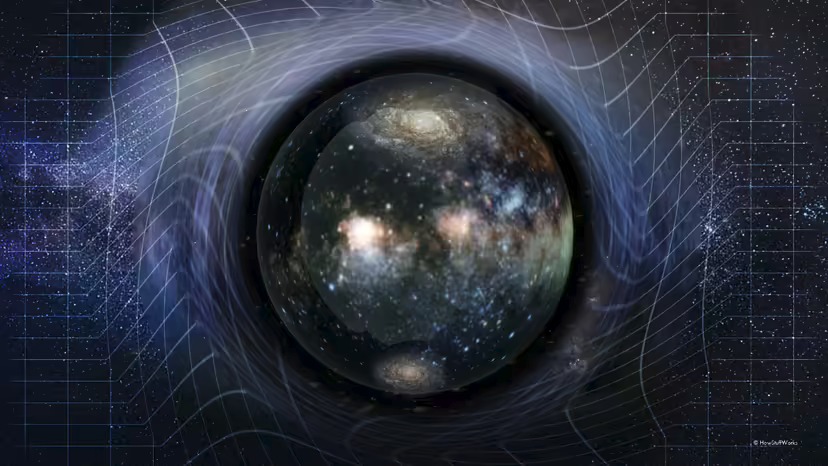
Cover picture:[https://science.howstuffworks.com/planet-nine-black-hole.html]-Jason Koch/HowStuffWorks
References
i. https://science.nasa.gov/uranus/exploration/
ii. https://www.britannica.com/biography/Urbain-Jean-Joseph-Le-Verrier
iii. https://www.space.com/26972-neptune-planet-discovery-skywatching.html
iv. https://www.planetary.org/articles/pluto-discovery-3
v. https://science.nasa.gov/solar-system/planet-x/ ,
vi. https://www.caltech.edu/about/news/caltech-researchers-find-evidence-real-ninth-planet-49523
vii. (TNO) are bodies, minor planets or simply objects orbiting further than Neptune, often found on the Kuiper Belt. https://commons.wikimedia.org/wiki/File:Distant_object_orbits_+_Planet_Nine.png
vii. Photo showcasing the similarity of orbits located in the area of the place where Planet 9(X) should be located https://commons.wikimedia.org/wiki/File:Distant_object_orbits_+_Planet_Nine.png Author : Nrco0e
ixix. Located in Hawaii, because of its large field view, proved by already noticing a hidden giant planet, it may catch Planet 9, as its orbit is as well rather large. https://www.sciencedaily.com/releases/2025/12/251221043227.html
x. Located in Hawaii, one of the world’s most productive telescope as it operates with nanometer precision.https://keckobservatory.org/our-story/telescopes/
xi. https://www.zooniverse.org/projects/marckuchner/backyard-worlds-planet-9
xii. Photograph made by the WISE NASA Telescope, showcasing a Brown Dwarf. https://phys.org/news/2017-07-citizen-science-brown-dwarf.html
xiii. It is estimated that with the Vera C. Rubin Observatory starting operating at the end of 2025/ beginning of 2026, because of its fast work, it may only take 3 to 4 years to find Planet 9(X).