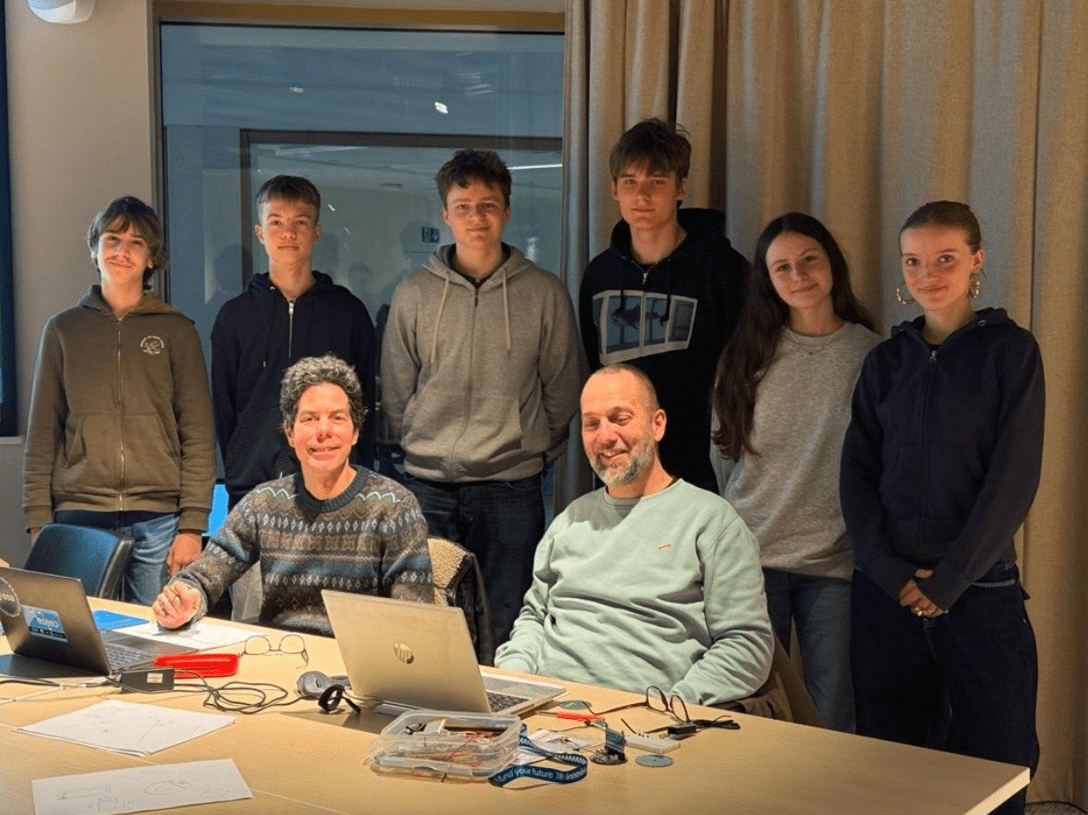
Have you ever wandered down the Da Vinci hallways and seen these strange, flashy posters with a slightly sci-fi looking can? Have you ever stopped to read one? You wouldn’t believe how rarely people actually do it.
These posters advertise the aptly named “Cansat” project and the numerous groups of students (of which I am proud to be a member) that represent our European School Of Brussels 1 in said project. That is exactly what I wanted to tell you about today: The ESA backed CanSat Project.
Authors: Stanisław Wilson, Klara Maxwell
Cansat-what is it and why should I take part?
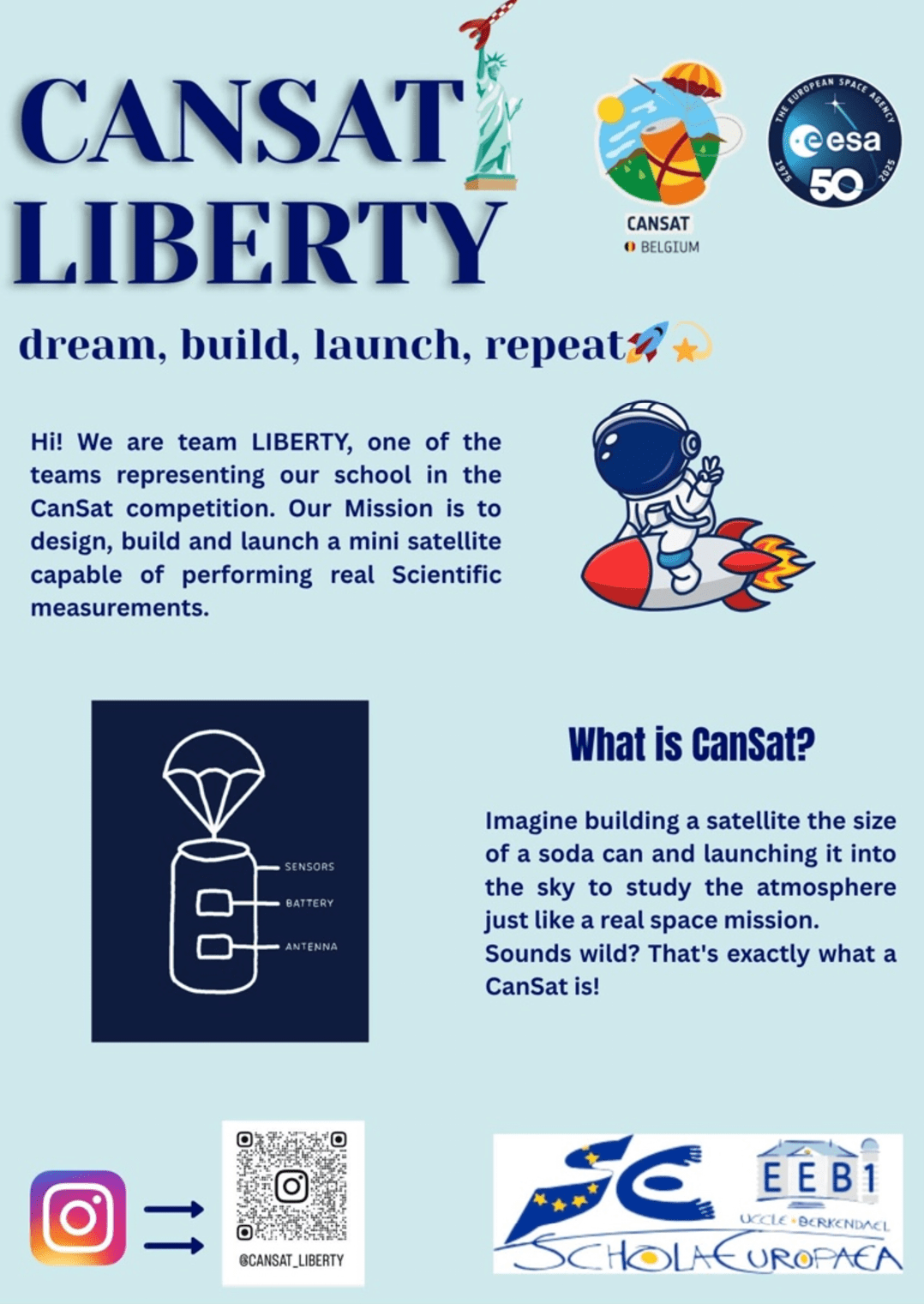
Image above: My team (Cansat Liberty)’s poster design.
In a nutshell, Cansat is an engineering project, where students build a mini satellite the size of a soda can and launch it a kilometre into space, from where is floats majestically downwards, attached to a parachute (sounds silly when written down). The idea is to promote scientific ingenuity and problem solving in the spirit of teamwork. Every year, 40 groups of 5-6 students S5 and up from around Belgium (including both boys and girls) try their luck in this competition. Your journey begins once you pass an anonymous selection process.
Over the years, hundreds of teams have tried their luck in the competition, many of which are home-grown. This year alone our school has 3 finalist groups but there are many more! Our school has had teams participating since 2023, including: Świerszcz, Szyszka and Asteria, most successful run was back in 2025, when team Husarz won The Brussels finals! We believe that, sooner or later, a similar title is coming our way. Another important note, many of the aspiring students, who have taken part in the Cansat project have since gone on to study equally ambitious scientific courses in the most competitive of Universities. Cansat is great as a stepping stone to get into the world of science and innovation.
Before starting your journey, you must divide the tasks and specialise (skill sets such as microelectronics and coding are a valuable asset) but you really need to be able to cooperate. Each and every team’s satellite must perform two missions; a primary mission, which consists of measuring atmospheric variables (temperature, pressure and humidity) and comparing that data with standard atmospheric models, and a secondary mission, which you’re free to choose.
Tip: It should be flashy and tough to execute,o impress the jury and ensure further qualification among the teams.
Then, the real fun begins. Over the following few months, you’ll have to scramble to assemble the can, and all its internal components, while sticking to a strict budget and most importantly write an incredibly long (seriously) long scientific report.
In it, you must describe your can, components and parachute design, testing processes, and prove that you are actively promoting the Cansat project, which is why I’m here, writing this 🙂
If your report is good, you have a solid chance of getting to the semi-finals, where you’ll have to present and explain your project in front of a jury. If you successfully pass this hurdle your team is on its way to the finals, where you’ll finally have the opportunity to launch your can.
What does it take?
We won’t beat around the bush; this project requires a lot of time and dedication. Regular meetings, tests and support sessions with engineers will eat up your free time, but if you and your team are passionate and hard-working you’ll find this competition a fun and rewarding experience. If you’re interested in participating in this project next year, contact your physics teacher or turn to someone you know who has or is taking part in it. Create teams and uphold some healthy competition. If you don’t want to actively take part in the competition however, you could consider following our Instagram account,
You can support Cansat Liberty through this account: https://www.instagram.com/cansat_liberty?igsh=MWN5N2NyMTM5YWZ6Yg%3D%3D&utm_source=qr