Author: Anna Sophia Teles Krappitz
As I was reading Plato Tackles Climate Change by Matthew Pye I stumbled upon a passage that I found quite interesting. This passage led me to ask myself the question: why do we, as a society, choose to measure nations based on their monetary value, their wealth, or their industrial advancement?
We over-fixate on economical advancements and choose that as the indicator of humanity’s growth. Although this social structure means nothing if we disregard it, we seem overpowered by it.
Economists argue that economic growth serves as a means to “improve the standards of living” of mankind, but what matter does that have when it also leads to the scarcity of raw materials, the pollution of our air, and even the destruction of our flora and fauna?
“Human beings are depleting limited resources from the crust of the Earth at a formidable
rate, flattening biodiversity, exhausting fresh water supplies… and yet, we look at the surface
of what we are doing and casually call it ‘progress’.”
- Plato Tackles Climate Change
What is the Main Issue?
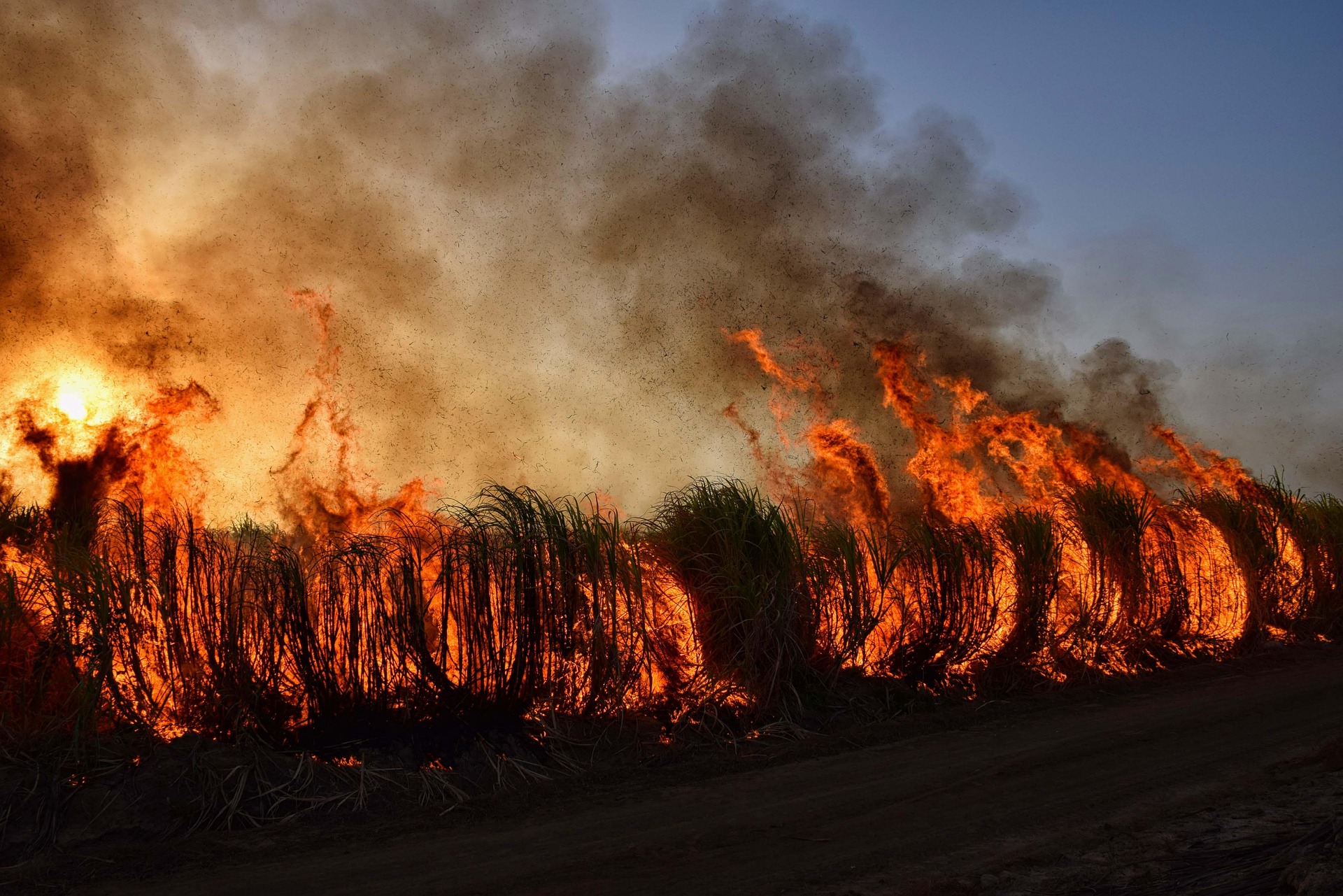
The economy has served an essential role in society, but it has also brought far more greed and gluttony. Many wars were driven by a desire for wealth and resources, but all they do is destroy our ecosystem: In the first 3 years of the Russian-Ukraine war, Russia’s invasion emitted the exact amount of CO2 that was annually emitted by Austria, Hungary, Czech Republic and Slovakia combined: an astonishing 230 million tonnes of carbon dioxide. And if we continue to release over 38 billion tonnes of CO2 each year, the goal to remain at a temperature of 1.5 ° C will be unachievable, as the “global emissions budget” (of CO2) to maintain this temperature will be exhausted very quickly.
It is a common understanding, for the most part, that climate change is real, and that it is damaging our planet, but we don’t seem to be making any changes to help. Many fear that fighting climate change will harm our precious economy, but, in truth, our inactivity on fighting climate change is what will do so.
Global heating is only slowing down productivity growth across the entire economy. Slight warming will cost it hundreds of billions of dollars, and home value is endangered by the threat of rising seas, severe storms and inland flooding. Ironically, the thing people believed would harm the economy is what is needed to power it: a stable environment.
So how can we mitigate climate change and, at the same time, keep our economy intact? Seeing that, in truth, economic growth and global cooling can go hand-in-hand, society needs to do whatever it can to protect both. We can still promote a green future whilst allowing growth, and we can only do so if we adopt sustainable practices.
Renewable Energies
Renewable energies are talked about a lot, and, amazingly, the consumption of these energy sources has increased and pushed global clean electricity to 40%. But when we compare the consumption of these renewable energy sources with that of coal or oil, the real proportion of energy use is revealed.
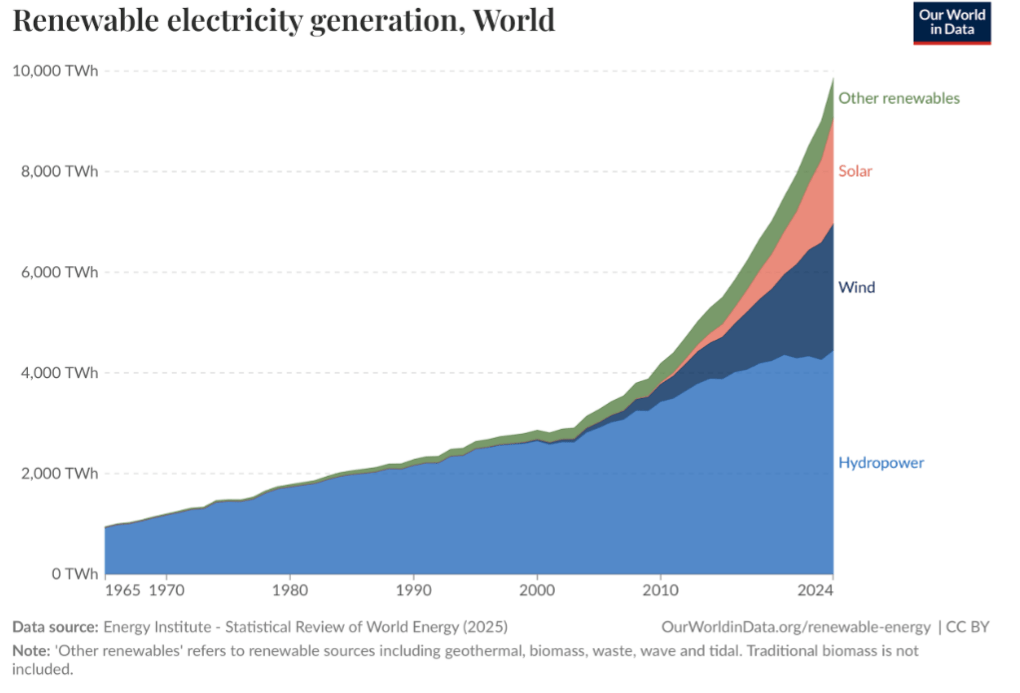
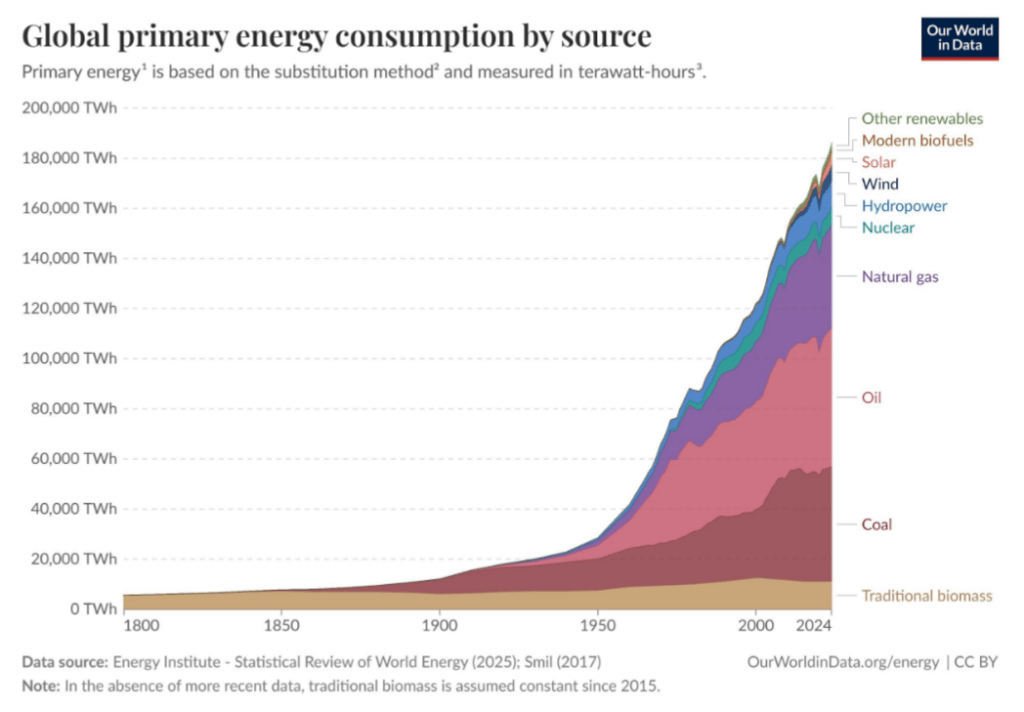
Clearly, this means that we aren’t doing enough, maybe because businesses and individuals fear the high initial investment cost of renewable energies. But renewable energies are far cheaper in the long run, and businesses that go for them become less vulnerable to the price fluctuations of the fossil fuel market and receive major tax incentives. This can help to incentivise further businesses to follow this path, and it not only benefits them, but our planet as a whole.
Agroecology
Agroecology is essential for creating a sustainable and resilient food system, and, by focusing on increasing crop yield we reduce the need for so much land, avoid the destruction of ecosystems, allowing them to thrive, and we improve resource efficiency. Increased crop yield also benefits the farmers immensely, as it offers them higher incomes, and leads to improved economic viability.
A Final Conclusion
From my research, I have learnt that the conflict between economic development and environmental stability is not black and white: you aren’t just for one or the other, the two can co-exist in our society and make the other stronger, but we need to learn how to do so properly if we want to continue living on the planet we call home, as we can learn how to properly fix the climate issue whilst still reaching the macro-economic aims.We cannot be blind-sided by our greed, as we are so much more than ourselves, we are all
members of a society who impact those around us. So why not use that to fix the problem that we have caused?
Edited by: Olivia Pataki
Cover Image: RosZie from Pixabay https://pixabay.com/illustrations/environment-environmental-protection-7412966/
Sources:
https://pmc.ncbi.nlm.nih.gov/articles/PMC7507775
https://www.bbc.com/news/business-26682206
https://ourworldindata.org/co2-emissions
https://ourworldindata.org/co2-emissions
https://ourworldindata.org/energy-production-consumption
https://www.resolvenetzero.co.uk/blog/article/4-ways-renewable-energy-will-benefit-businesses